2005 - 2006
University of Illinois at Chicago, Electronic Visualization Laboratory
What is "Pan"?
The title of this work, Pan, is a Korean word that has several different meanings such as a plate, a disk, a place, a stage, etc. This word instinctively stands for a plate that is matching to the interface of the work, at first hand. But the plenty of its meaning is lying on the spatial definition. Korean folks set Pan for a delight performance where people gather. The public are invited to join and enjoy all together. In this work, Pan is implying all these meanings and accommodating activities by giving a tangible interactive medium. Live activities in tradition are interpreted as softened dynamics in visual.
PAN
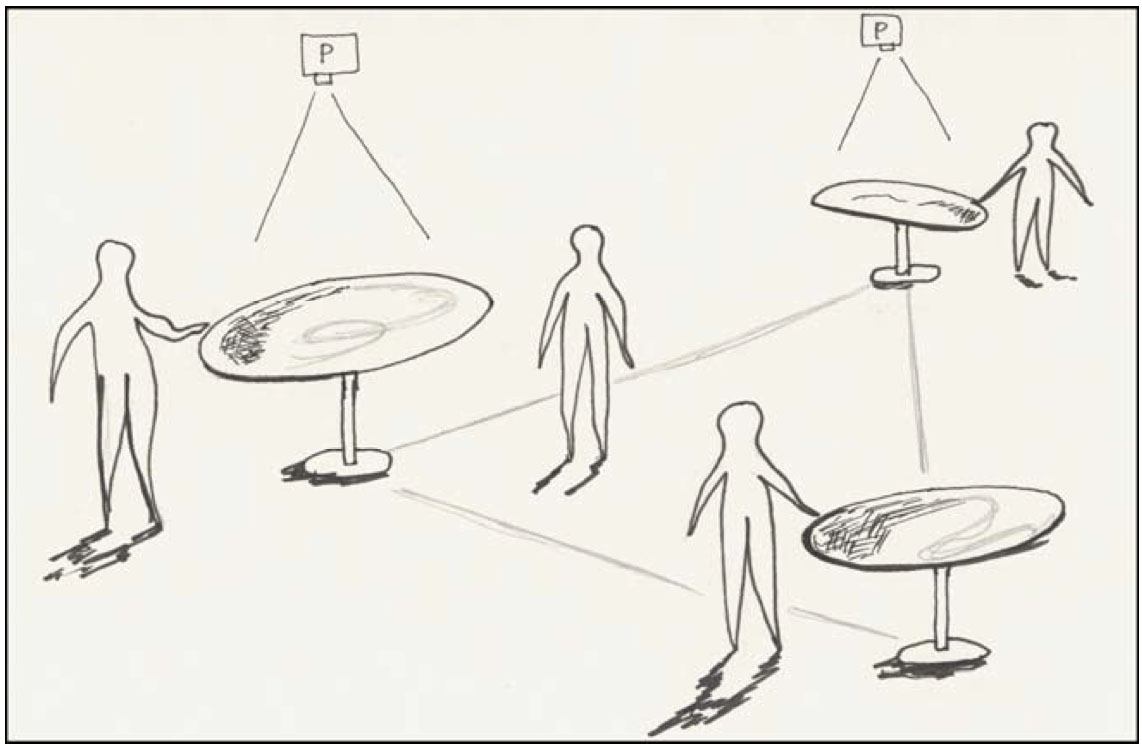
Pan Interface Design & Implementation
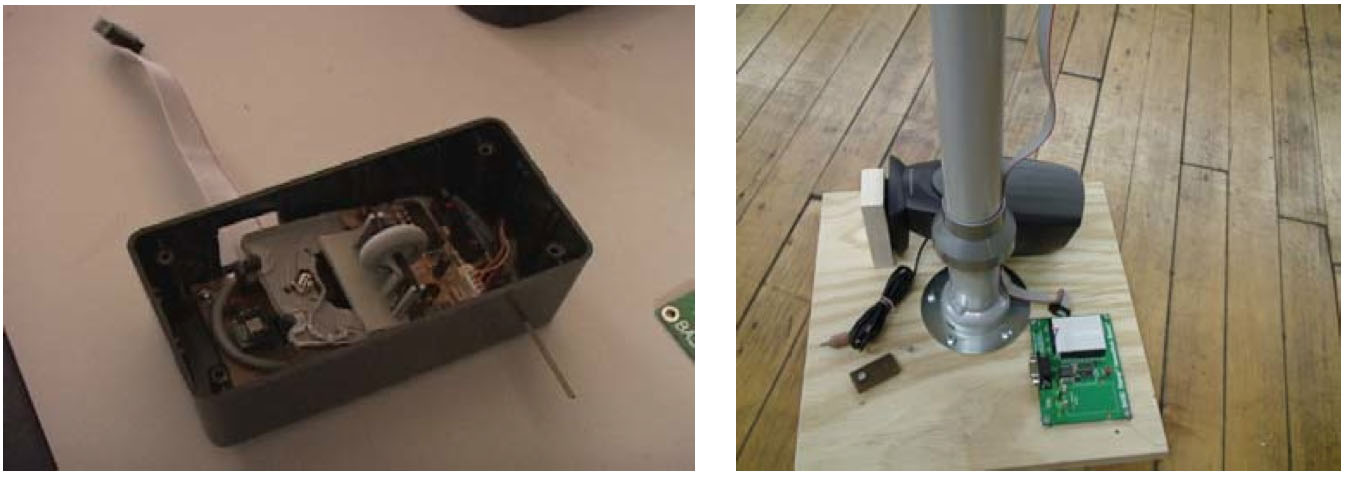
One of the most challenging parts of this project was the design of the physical Pan interface. Since I wanted to make it playable, it was not easy to build such a decent sized tabletop mechanically. In terms of movement, the interface requires 3DOF of rotation. A user should be able to rotate a tabletop and tilt in some degree in any direction. After many iterations of design trial and error, I finally managed to build the final version. It is composed of lazy Susan style bearing to support rotation and vertical spring dampers for tilting.
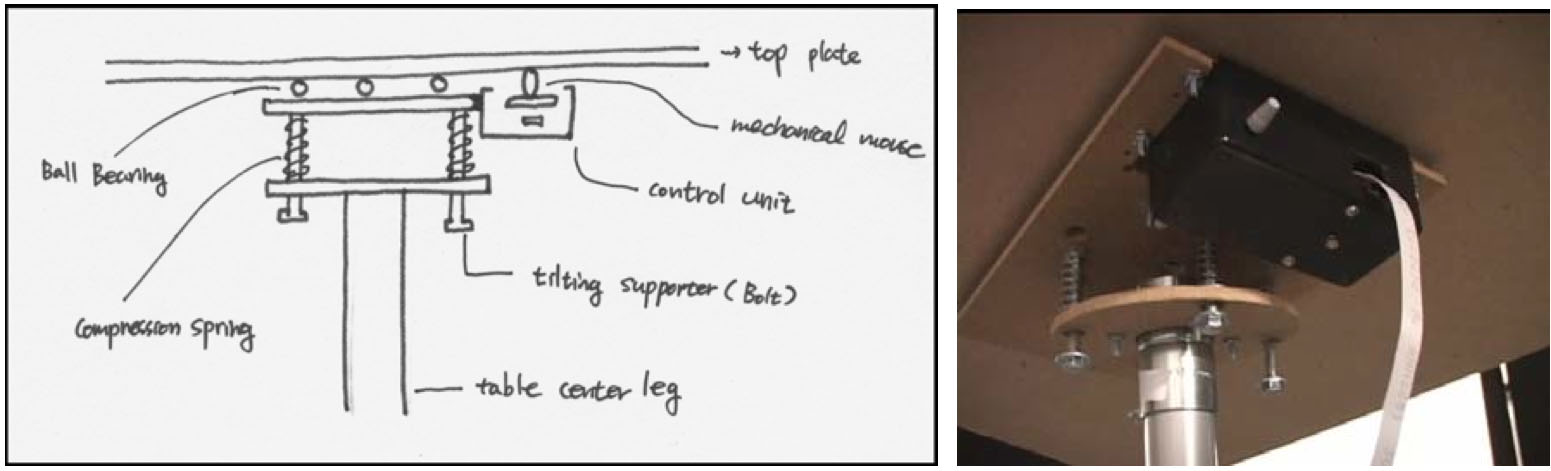
Sensors and Electronics
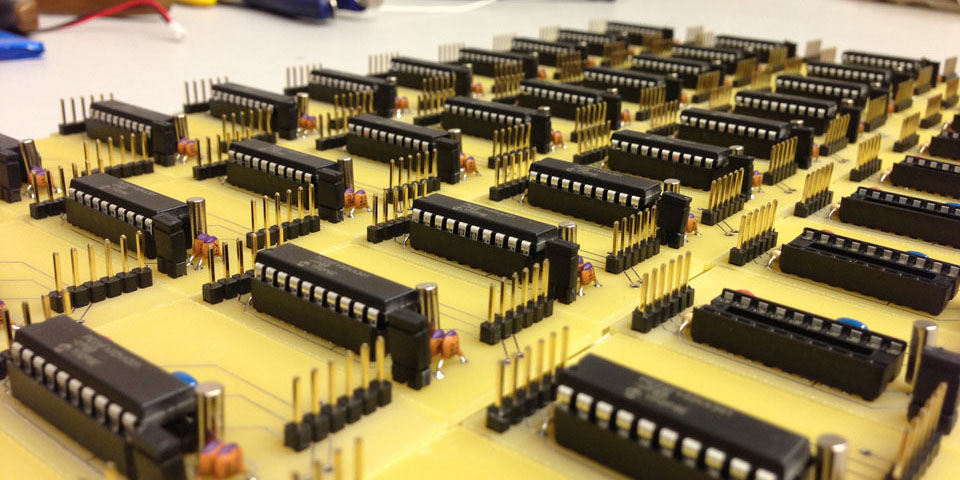
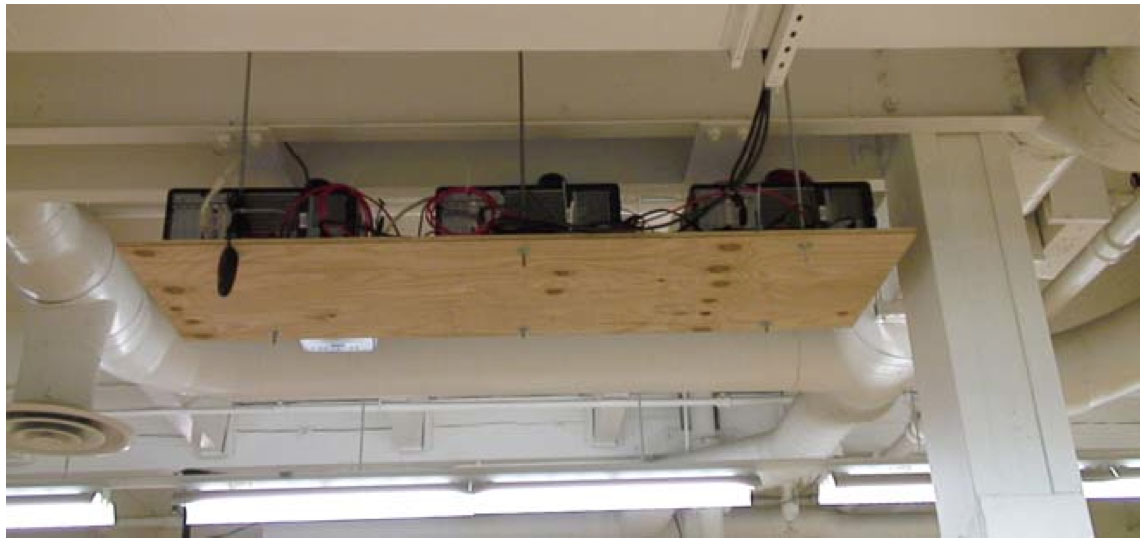
As far as sensors and micro-controller concerns, I made some hack to a very old mechanical ball mouse to detect rotational speed. In addition to the hacked mouse, there is a small circuit with a sensor to detect table angles. Then, all components in the box connected to a micro-controller via ribbon cable. There is also a speaker in the base to render local sound effect for each interface. Base plate was wrapped with a nice and clean black box during showtime. Finally, serial communication cable runs to the host computer to communicate with a visualization application. For the exhibition, I wanted to make the show floor as clean as possible. There should be only table interfaces, nothing else. Therefore, I mounted all three host PCs in the ceiling to hide them.
Pan Visualization Concept
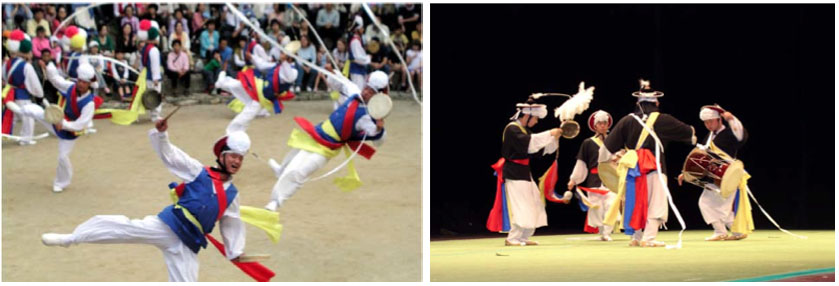
Pan's visualization was rooted from one of Korean traditional performances, Sa-Mul-Nol-I. It is a group performance in public space cheering people for good harvests and other social events. This is well fitted to my concept of installation along with its title. I wanted to create some social, pleasant, group interaction with newly designed interfaces.
Visualization Design
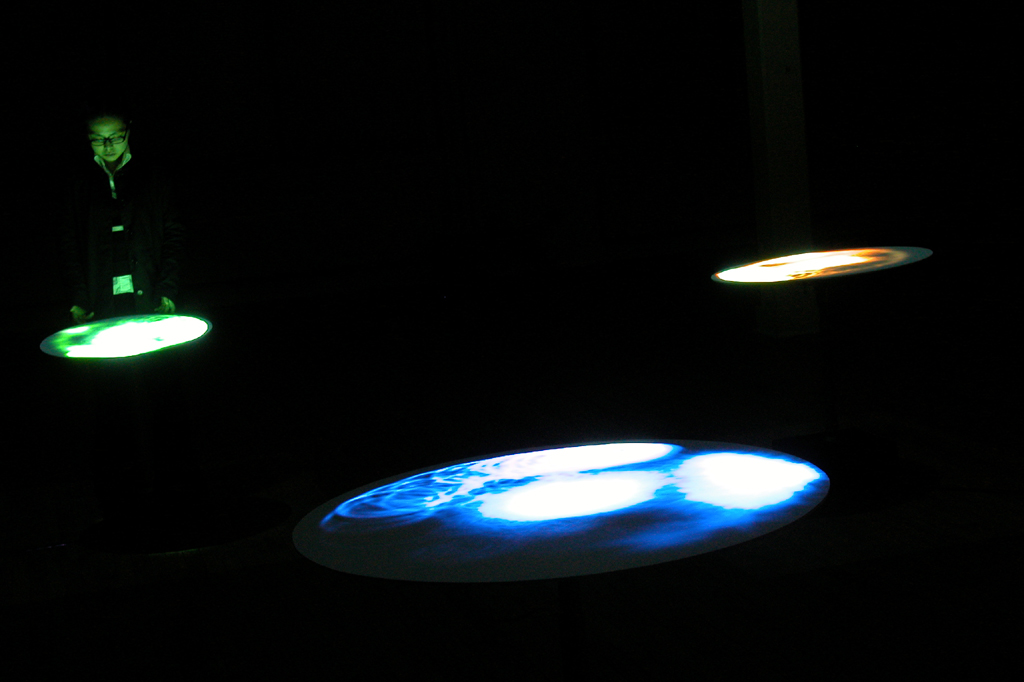
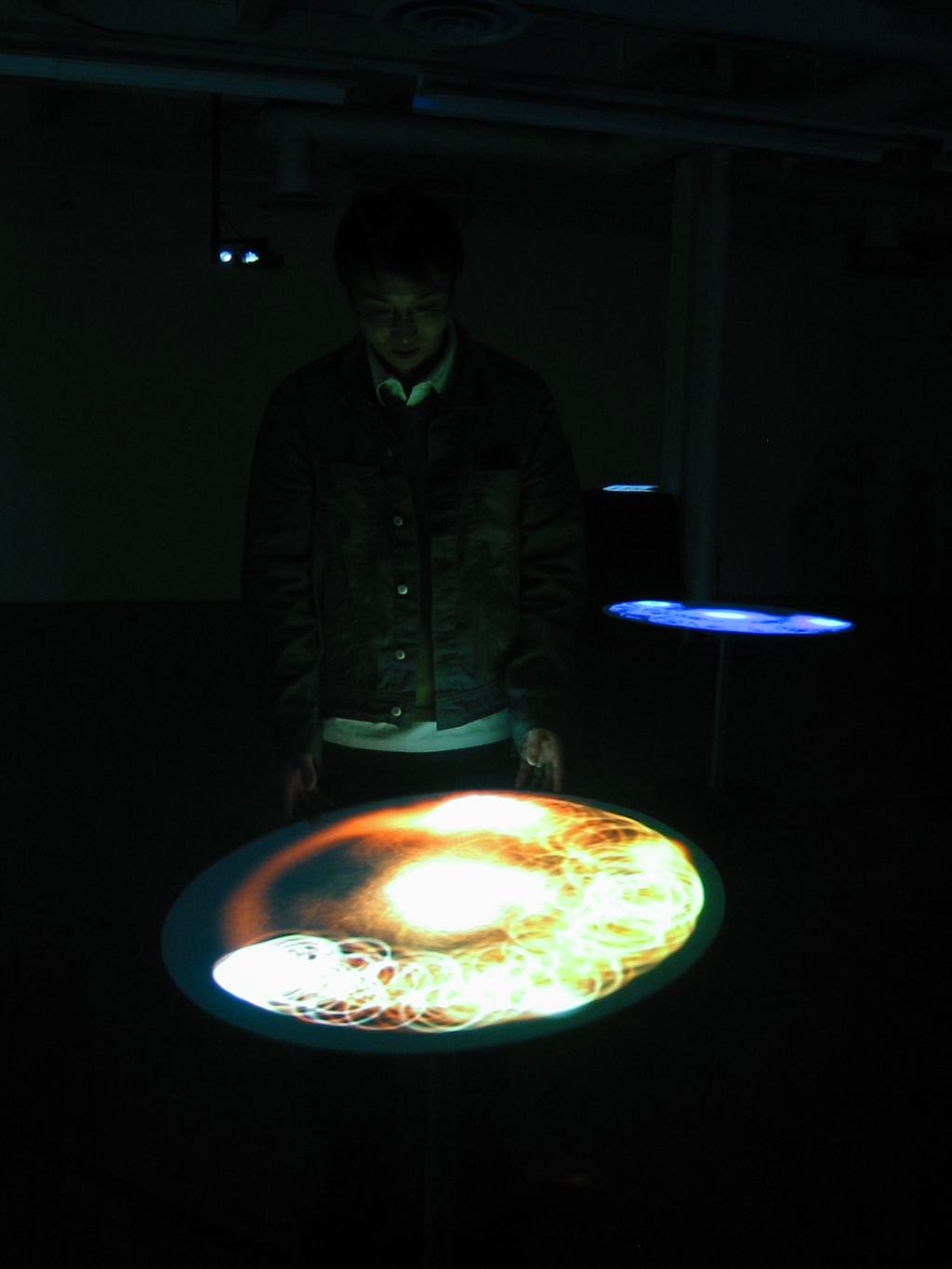
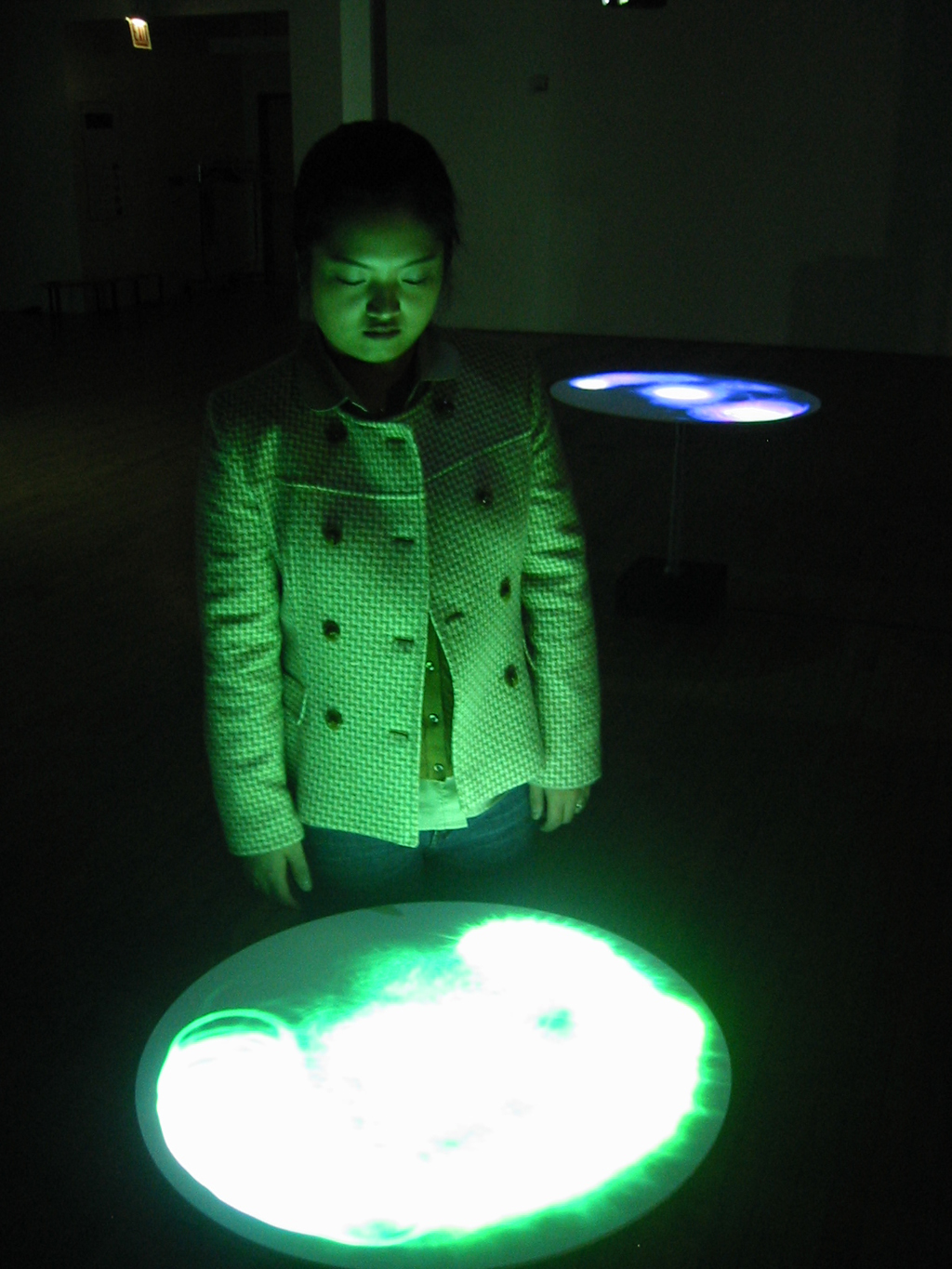
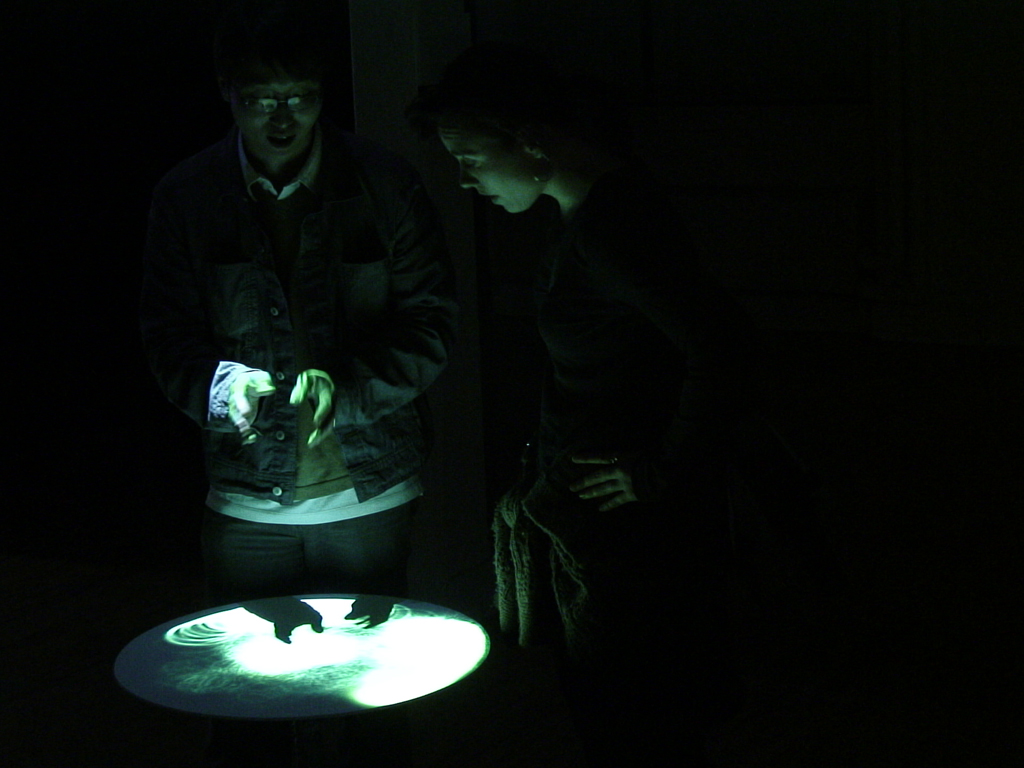
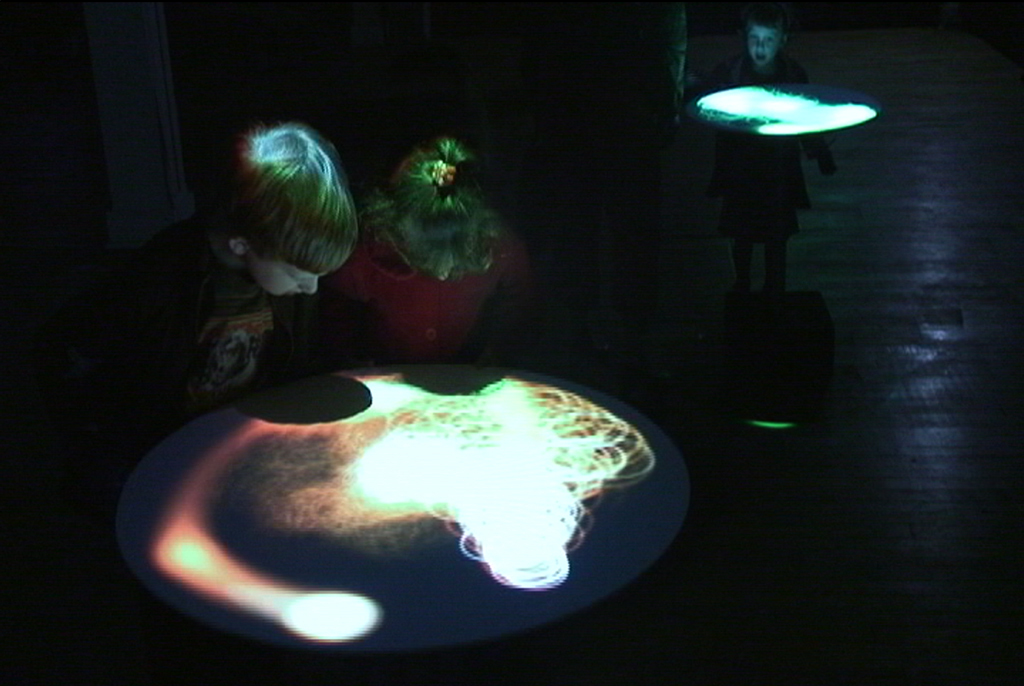
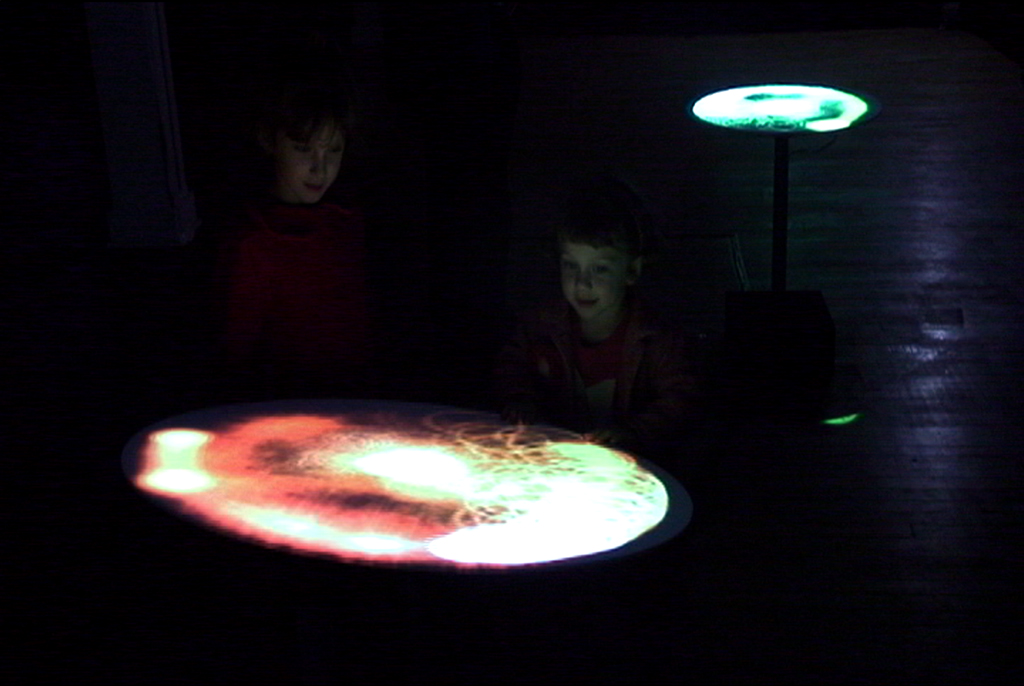
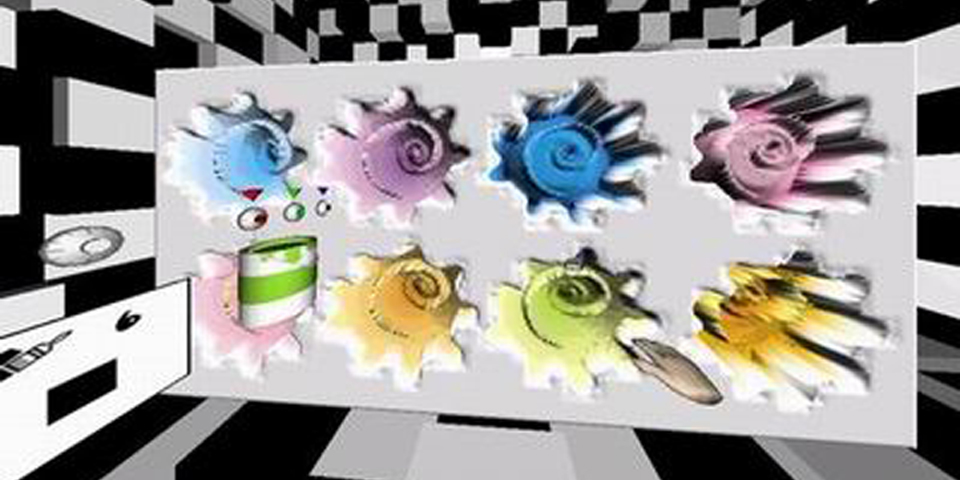
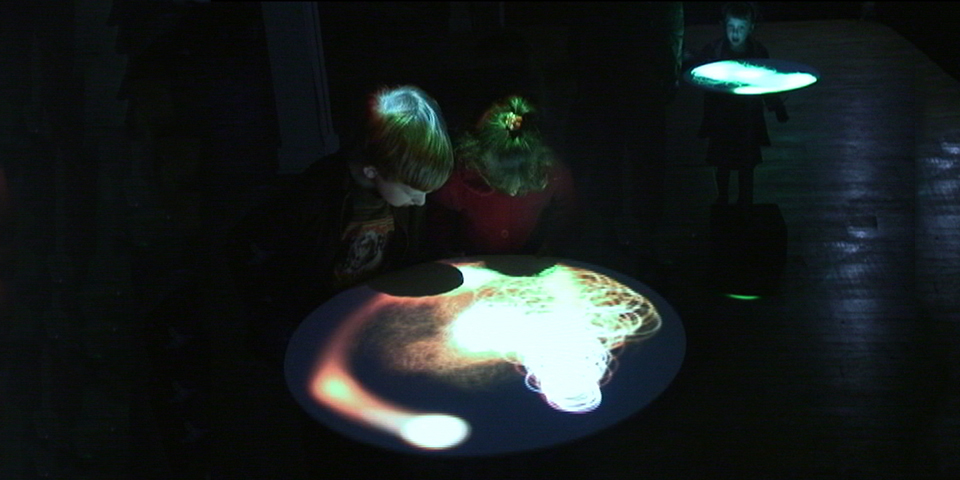
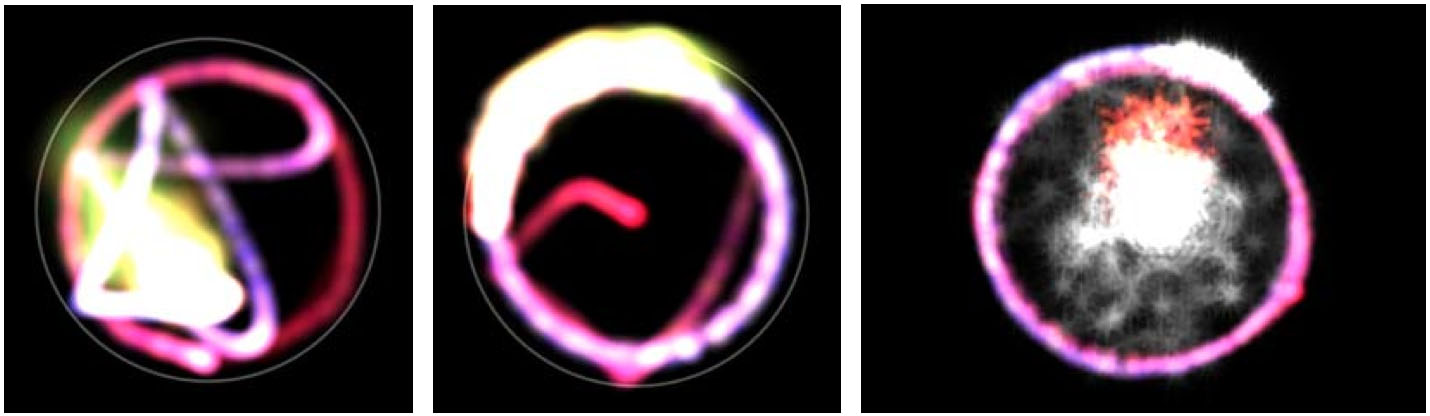
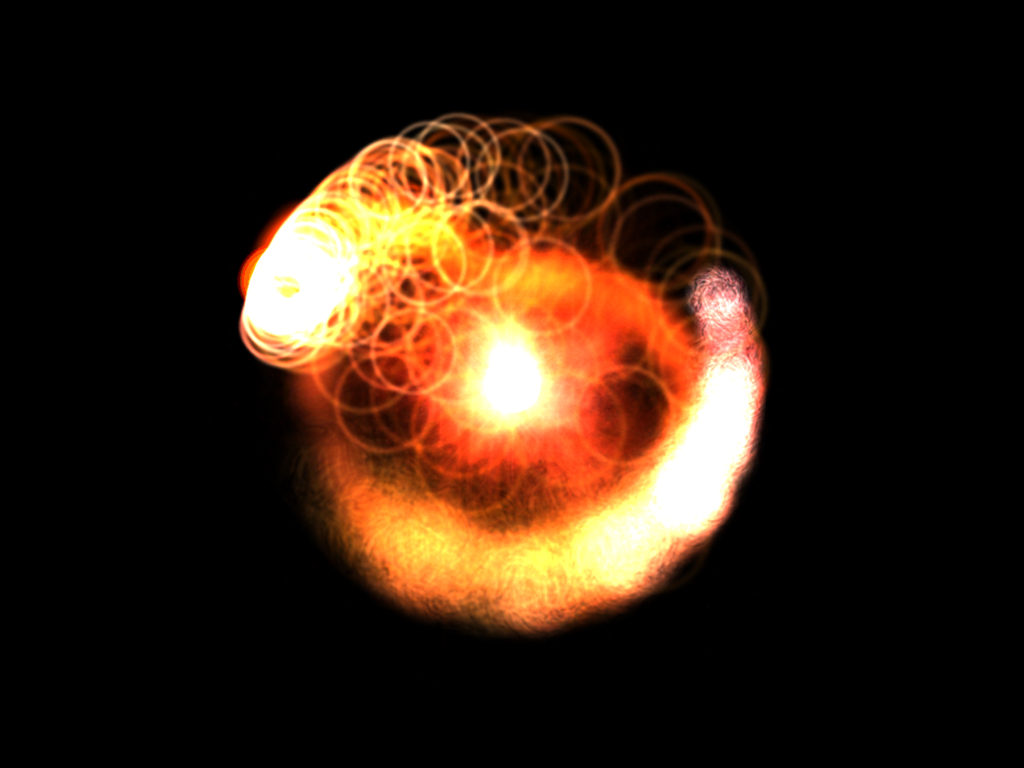
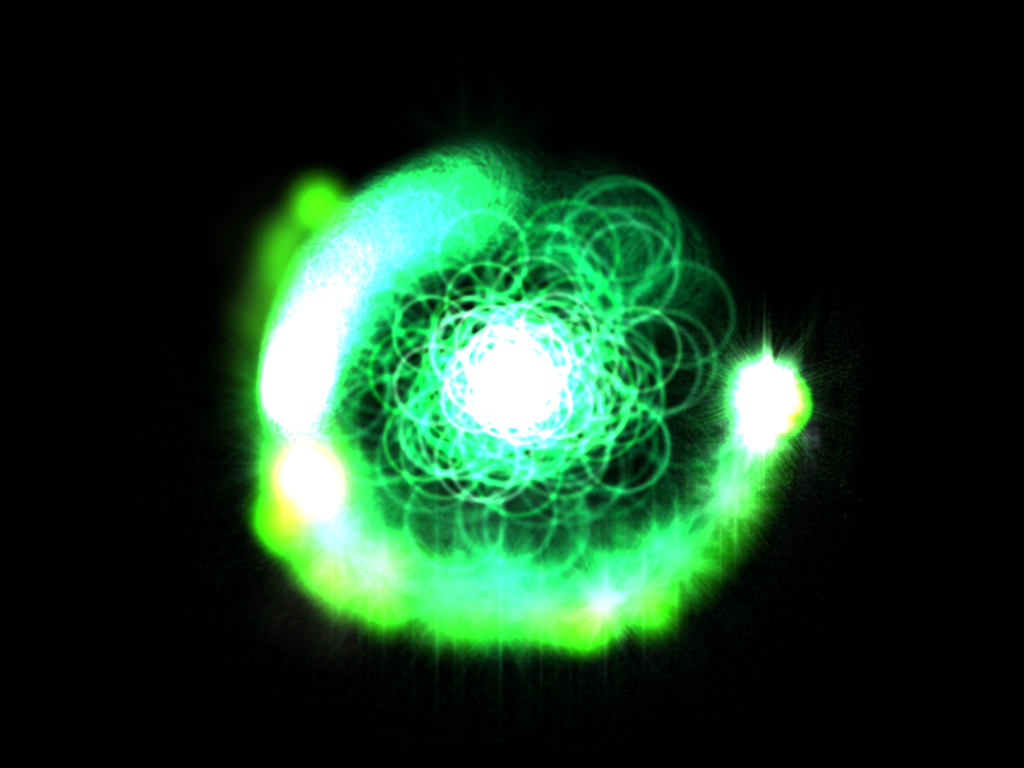
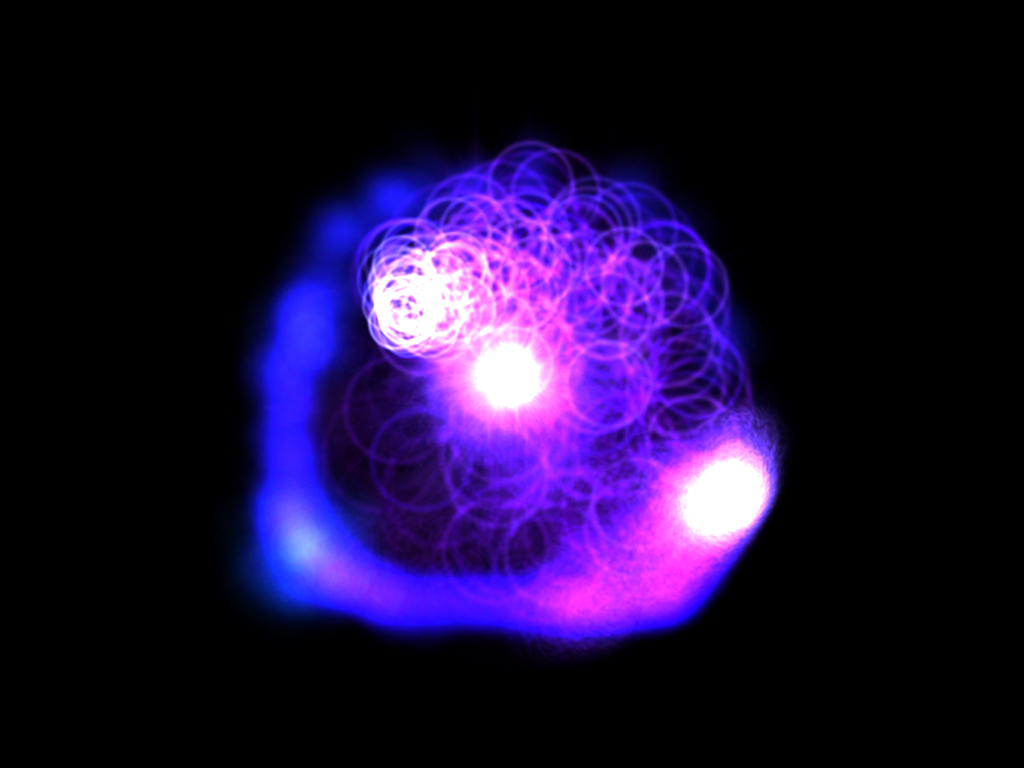
As you can see in the pictures, there are some pleasing elements of this performance. A ribbon mounted on a hat. Performers move and turn their head to form aesthetic visuals in the open air. This is what I imagined as motif of my visualization. As users interact with table interfaces, those interactions turn into momentum to draw abstract visual elements on the table surface. In the final design of visualization, I implemented three distinct visual shapes to represent each three interface's active visual generator. While one interacts with one table interface, the others also can see its visual representation on their own tabletop. All three interfaces and visual components work all together to create a live collaborative performance.
Exhibitions
Drawing Current — MFA Thesis Exhibition, Great Space / Cuppa Hall, University of Illinois at Chicago, May 2006. The New Eco series at Gosia Koscielak Studio & Gallery, Chicago, January 2007. "PAN — A Life Force," the first show from the NEW ECO exhibition series examining new ecology and media phenomena in an international art curated solo exhibition.
Award
Honorable Mention in Interactive category, Keio University's Keio Research Institute Digital Art Awards 2006.
Screenshots from each PAN interface
Screenshots showing the three distinct visual shapes rendered on each Pan tabletop interface during interaction.
Photos from thesis show
Photos from the Drawing Current MFA Thesis Exhibition at the University of Illinois at Chicago.