Oct, 2021
The CUBE, Moss Arts Center, Virginia Tech, Blacksburg, VA
Overview
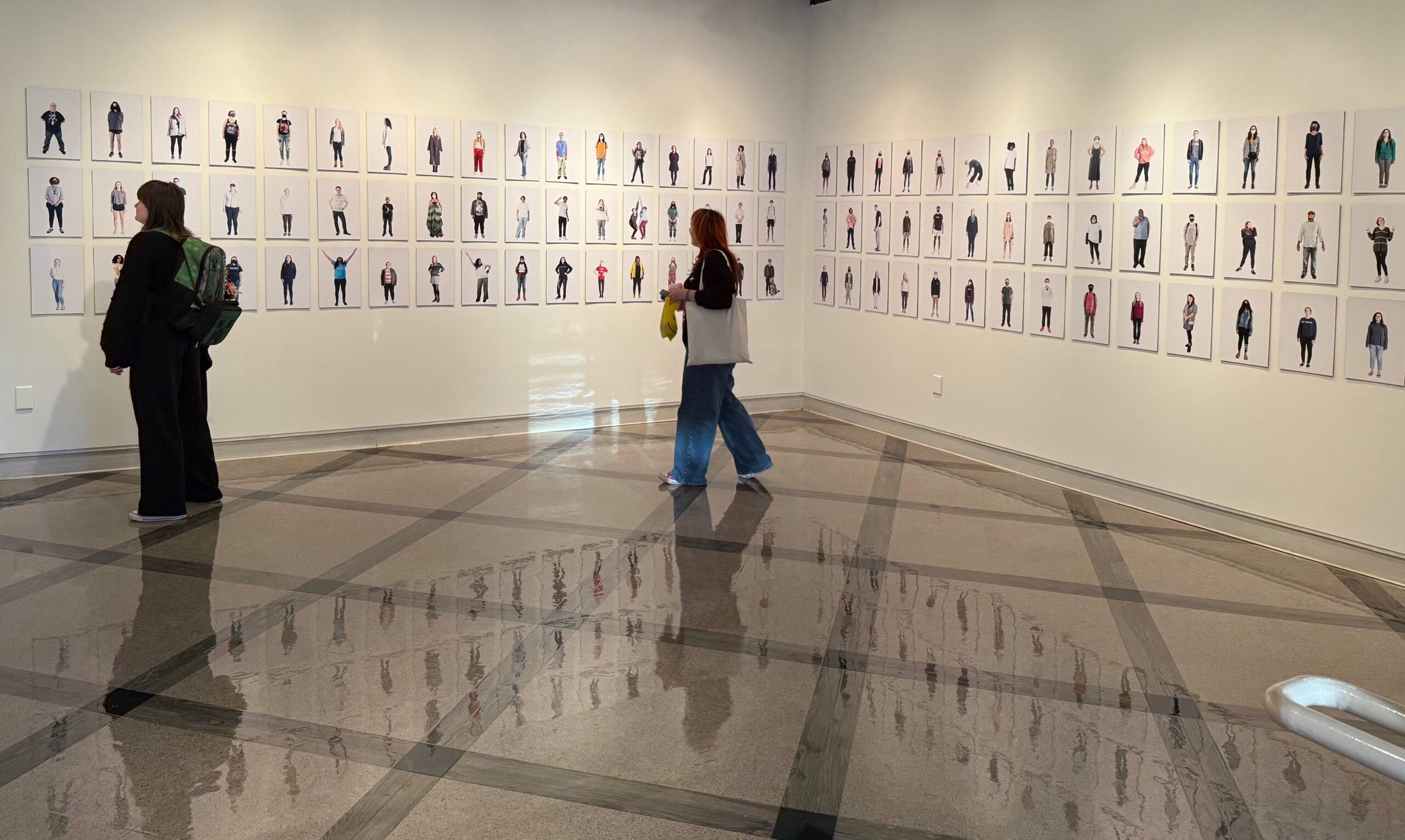
The 2021 iteration of Posture Portraits at the CUBE, Moss Art Center, represented a decisive expansion of the project's conceptual, technical, and participatory scope. Whereas the first installation (Connecticut College, 2018) was grounded in pre-collected posture photography data and static visualization, this second version was designed as a fully immersive, live participatory performance that foregrounded spontaneity, audience agency, and real-time story construction. This shift in approach deepened the work's central investigation into visibility, self-representation, and the politics of "being seen" (Berlant, 2011; Browne, 2015).
Conceptual Framework and Thematic Development
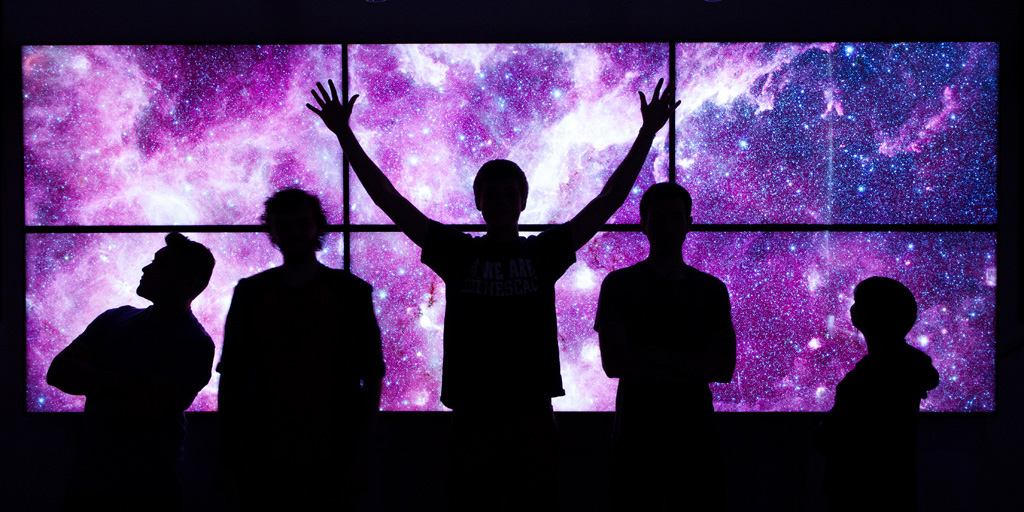
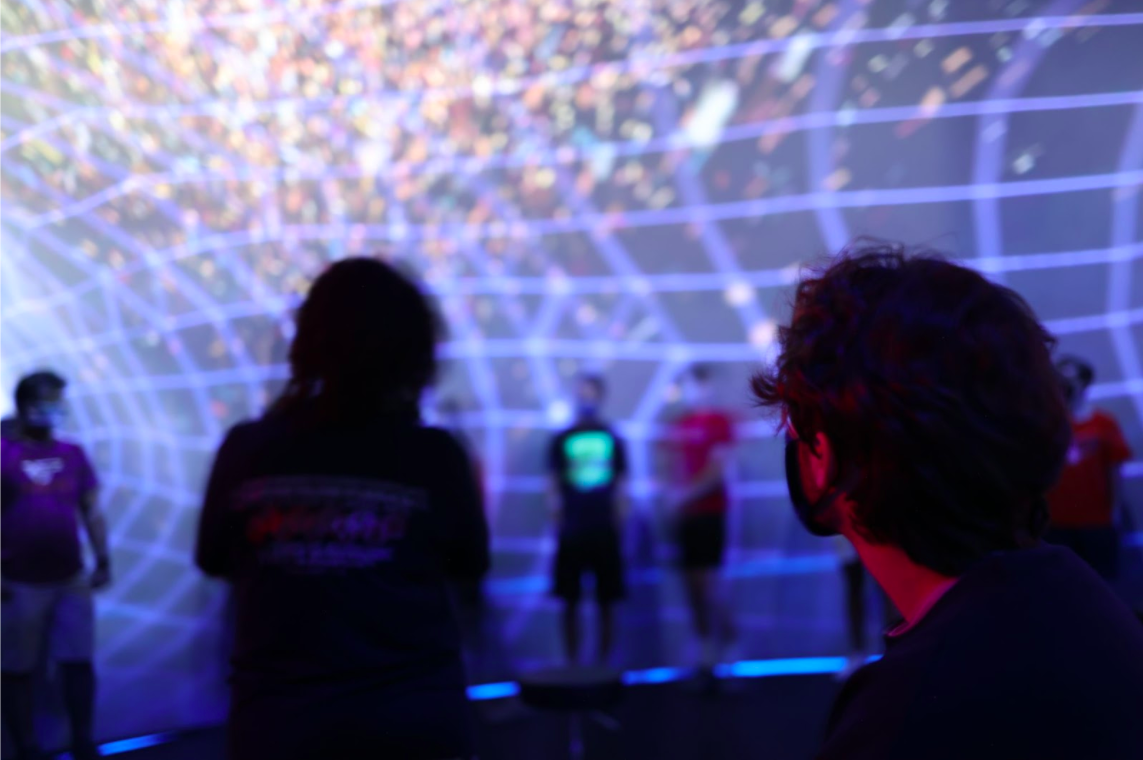
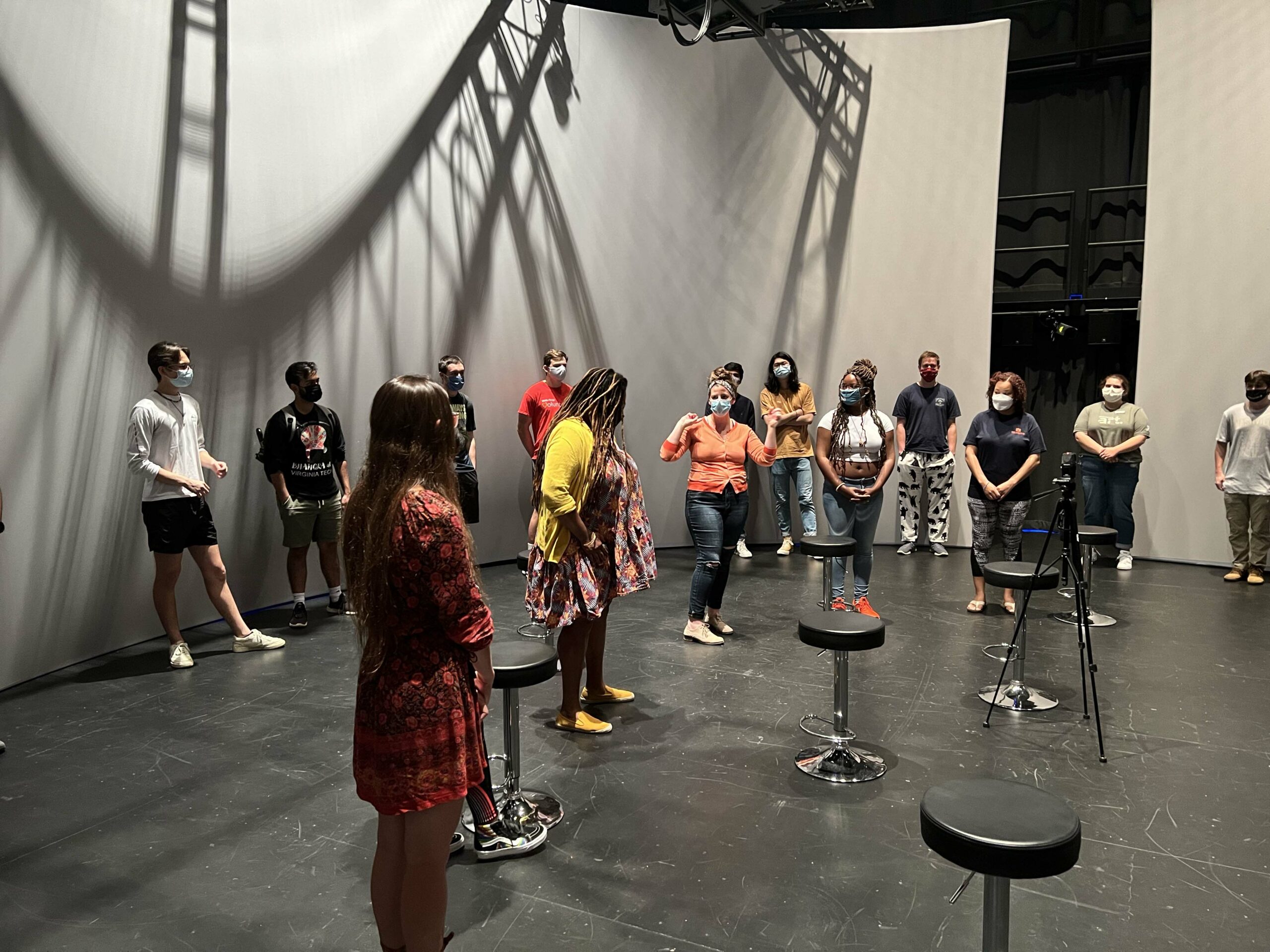
The project's thematic anchor was the deceptively simple question: "When was the first time you felt seen?" Emerging from earlier archival research into posture photography and eugenic visual regimes in elite U.S. colleges (Vertinsky, 2007; Lowe, 2005), this question threaded together themes of recognition, vulnerability, and the ambivalence of visibility. It also reflected a sustained critical engagement with the racialized and gendered legacies of institutional surveillance (Browne, 2015), reframing them within an aesthetic environment where participation became a form of agency. The installation resisted the historic posture portrait's rigid, objectifying gaze, instead enabling participants to choose how they were represented and to witness themselves within a shared narrative space. This iteration's conceptual and performative design leveraged the CUBE's distinctive technological capabilities — 134.6-channel 3D spatial audio, panoramic cyclorama projection surfaces, and high-fidelity interactive systems — to create an environment where visual, sonic, and embodied experience were inseparable. Live performances, integrated into the spatialized projections, blurred the boundaries between performer and spectator, fostering what we called "body empathy": an invitation to recognize shared corporeal vulnerability beneath socially constructed difference (Wynter, 2003).
Performance and Participation Design
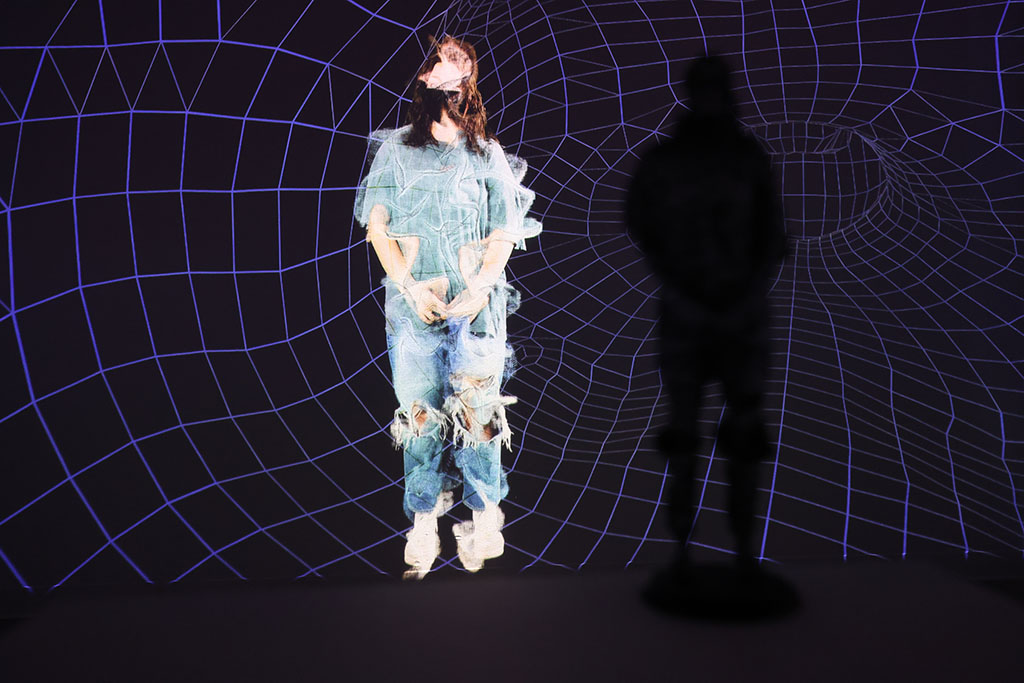
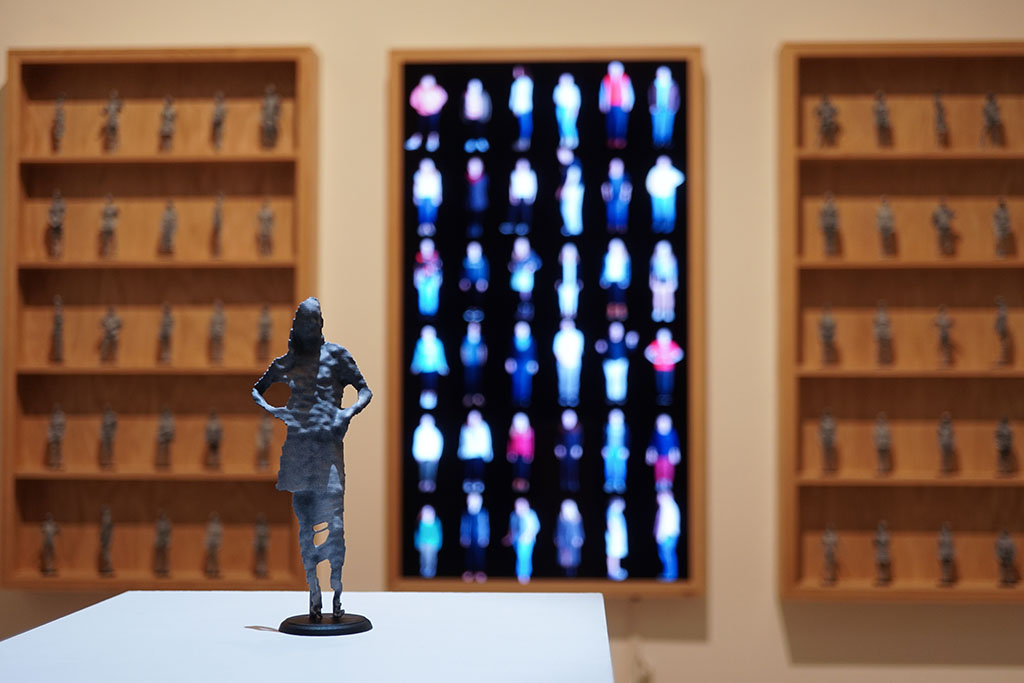
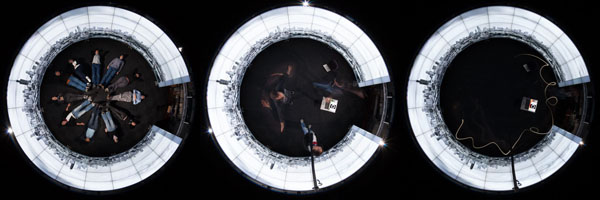
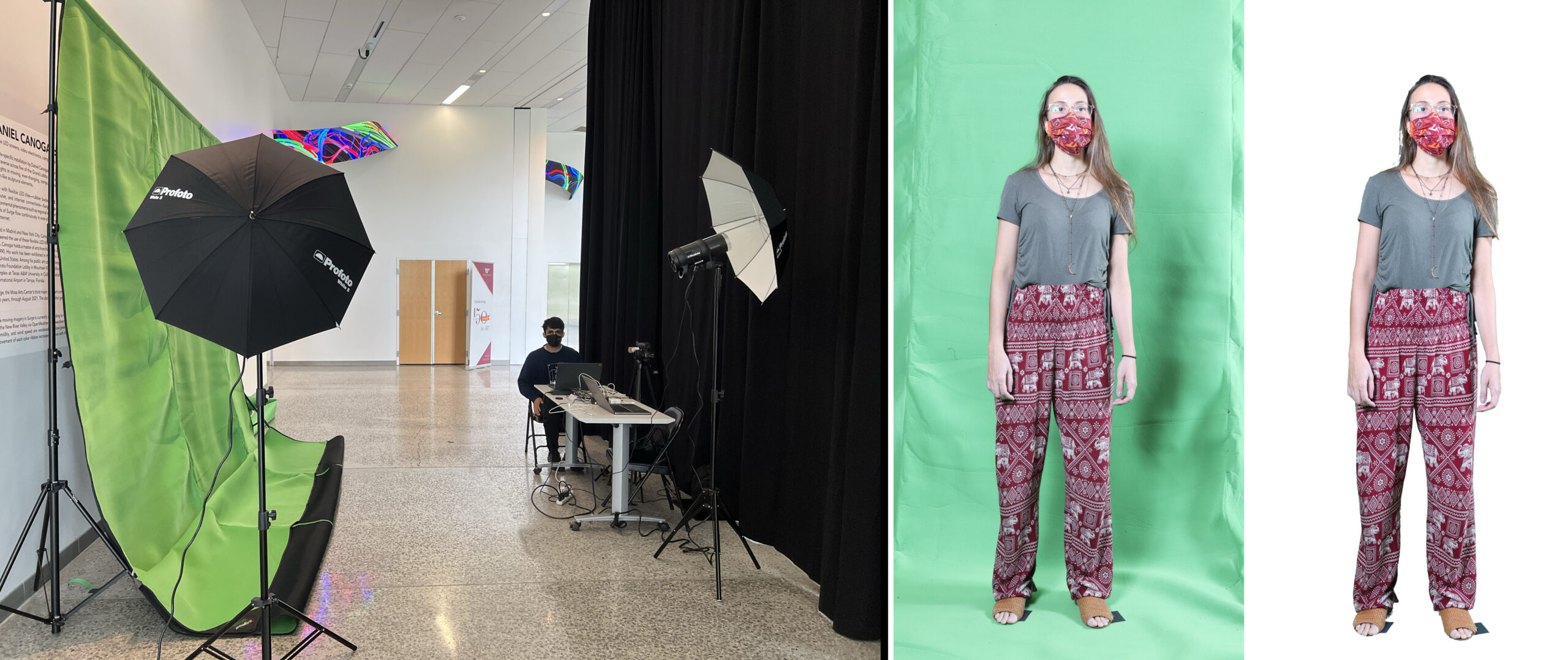
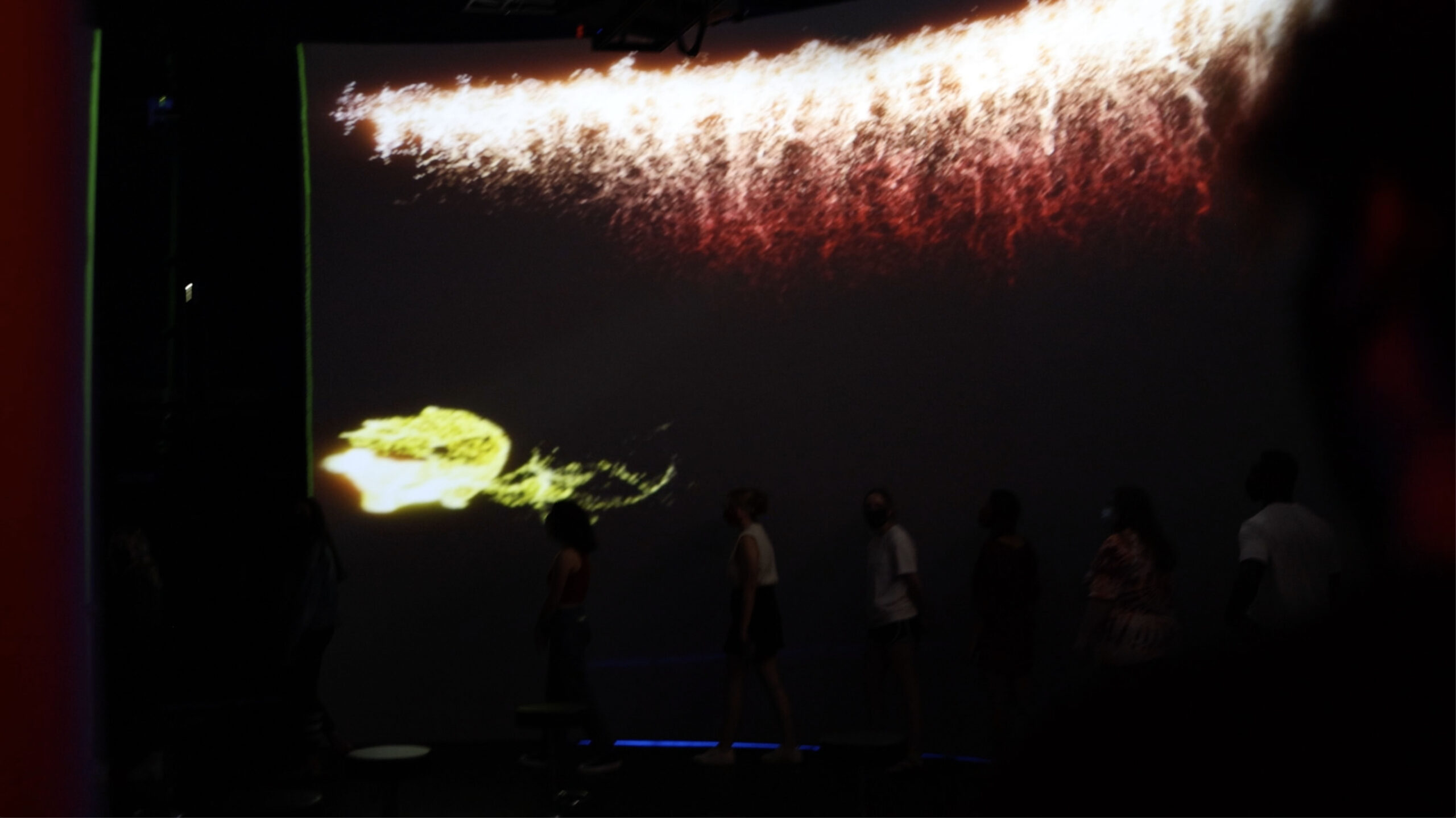
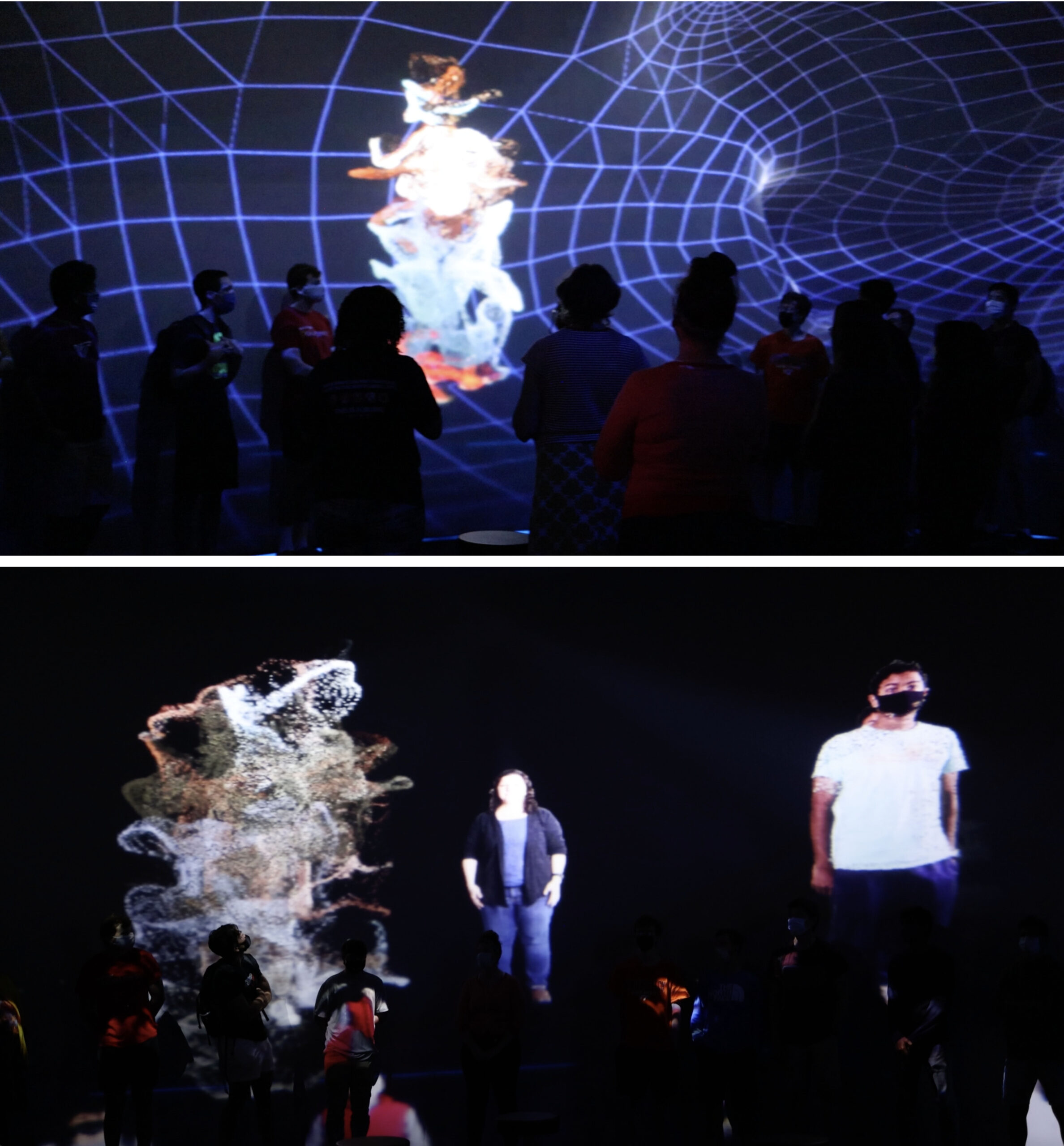
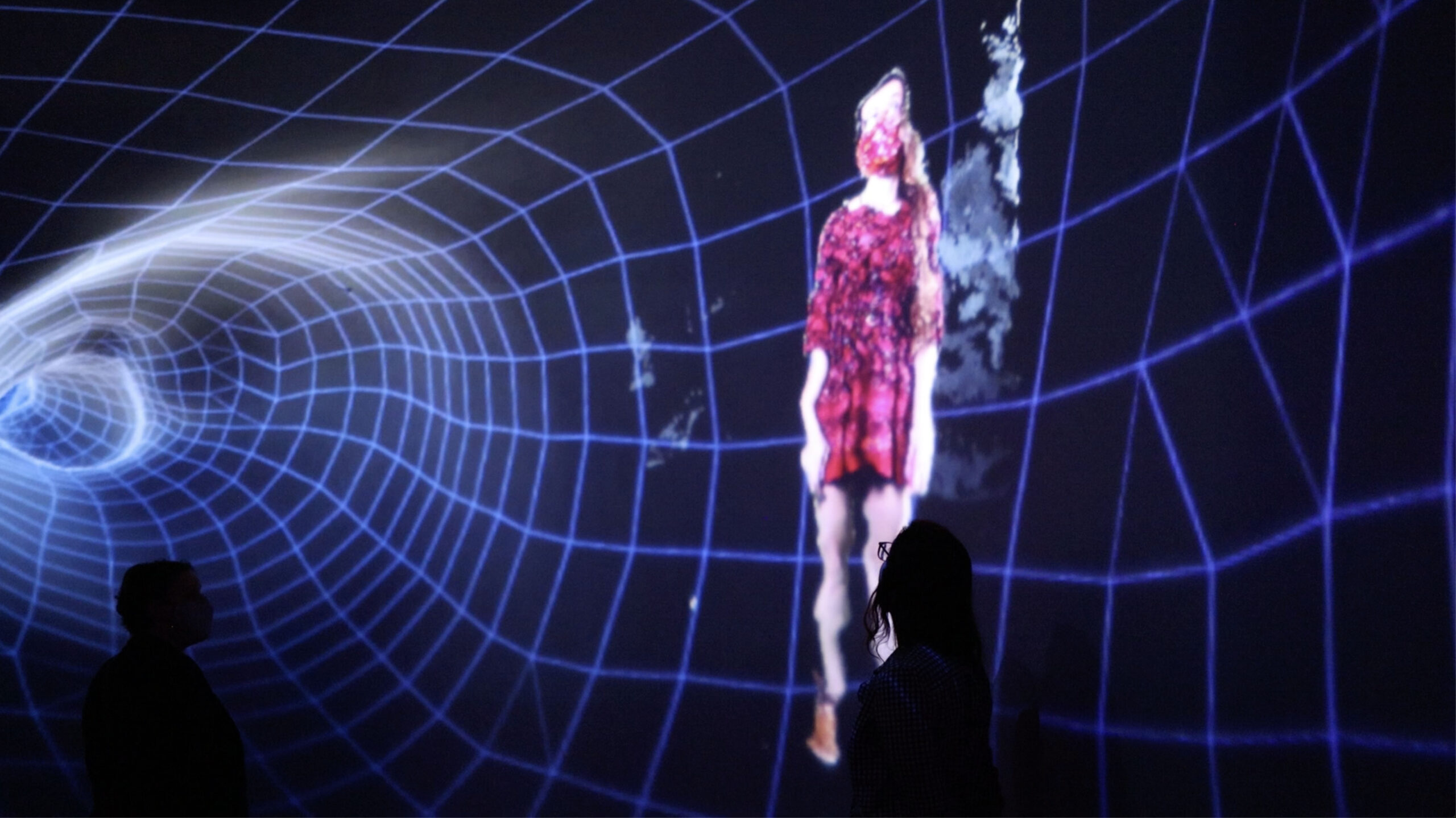
Upon arrival, audience members underwent a streamlined data capture process — consent form, posture photograph, and an introductory video — before entering the immersive space. Photographs were processed in near real-time to generate visualizations that were integrated into the unfolding performance. This approach contrasted with the months-long data preparation of the first iteration and underscored the immediacy of live participation. The performance featured three to seven performers per show, initially indistinguishable from audience members. Each delivered a "Monologue of Being Seen," their stories woven into the soundscape alongside visualizations of their own posture portraits dissolving into particle simulations. In the final sequence, audience portraits appeared in the same visual style as the performers', creating a visual and emotional crescendo in which every participant was folded into the collective representation.
Visualization and Spatial Sound Design
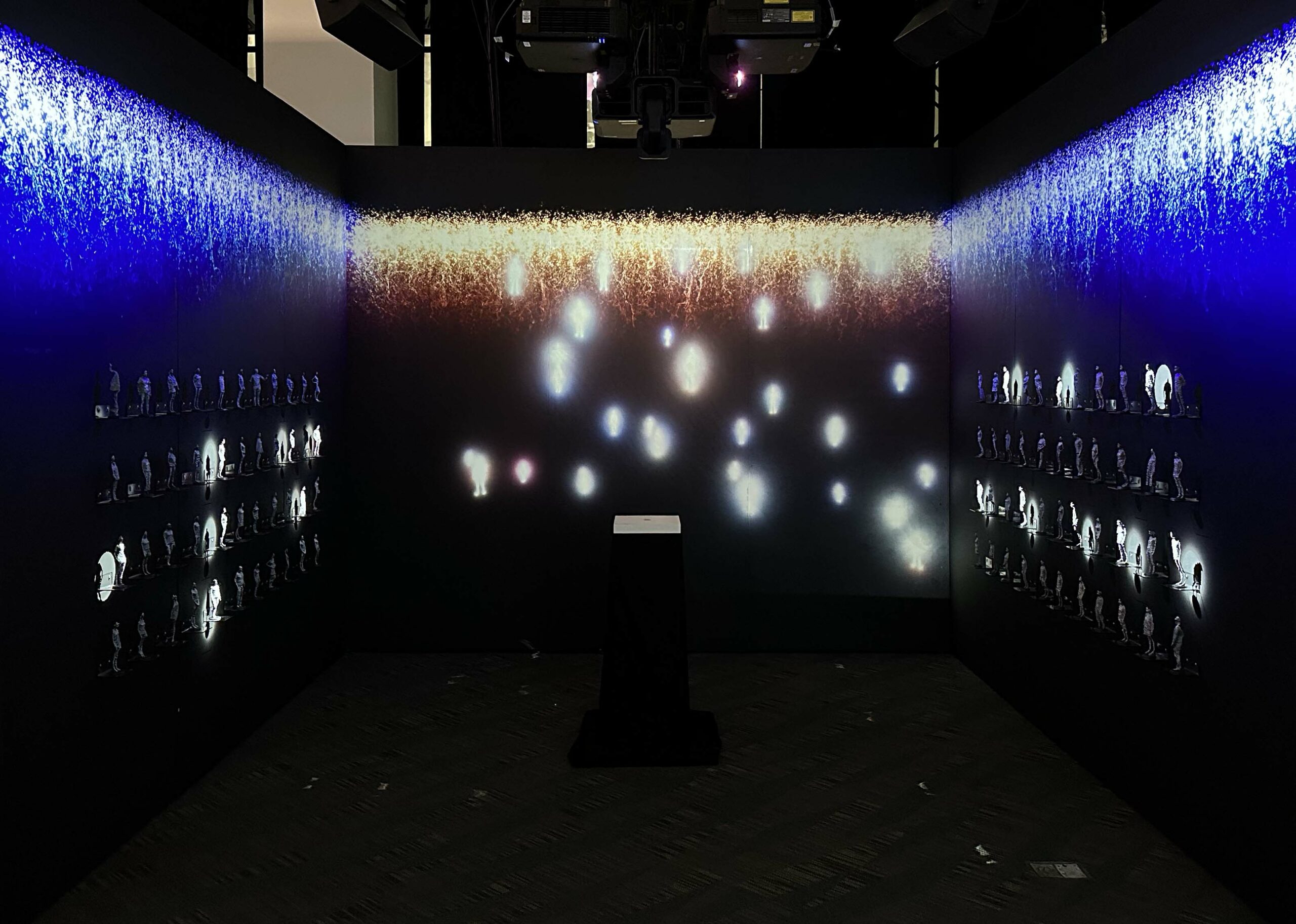
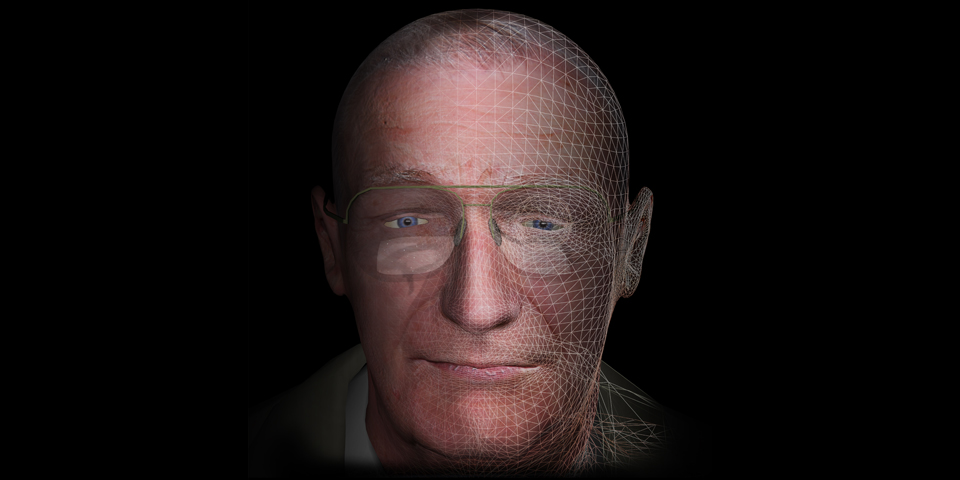
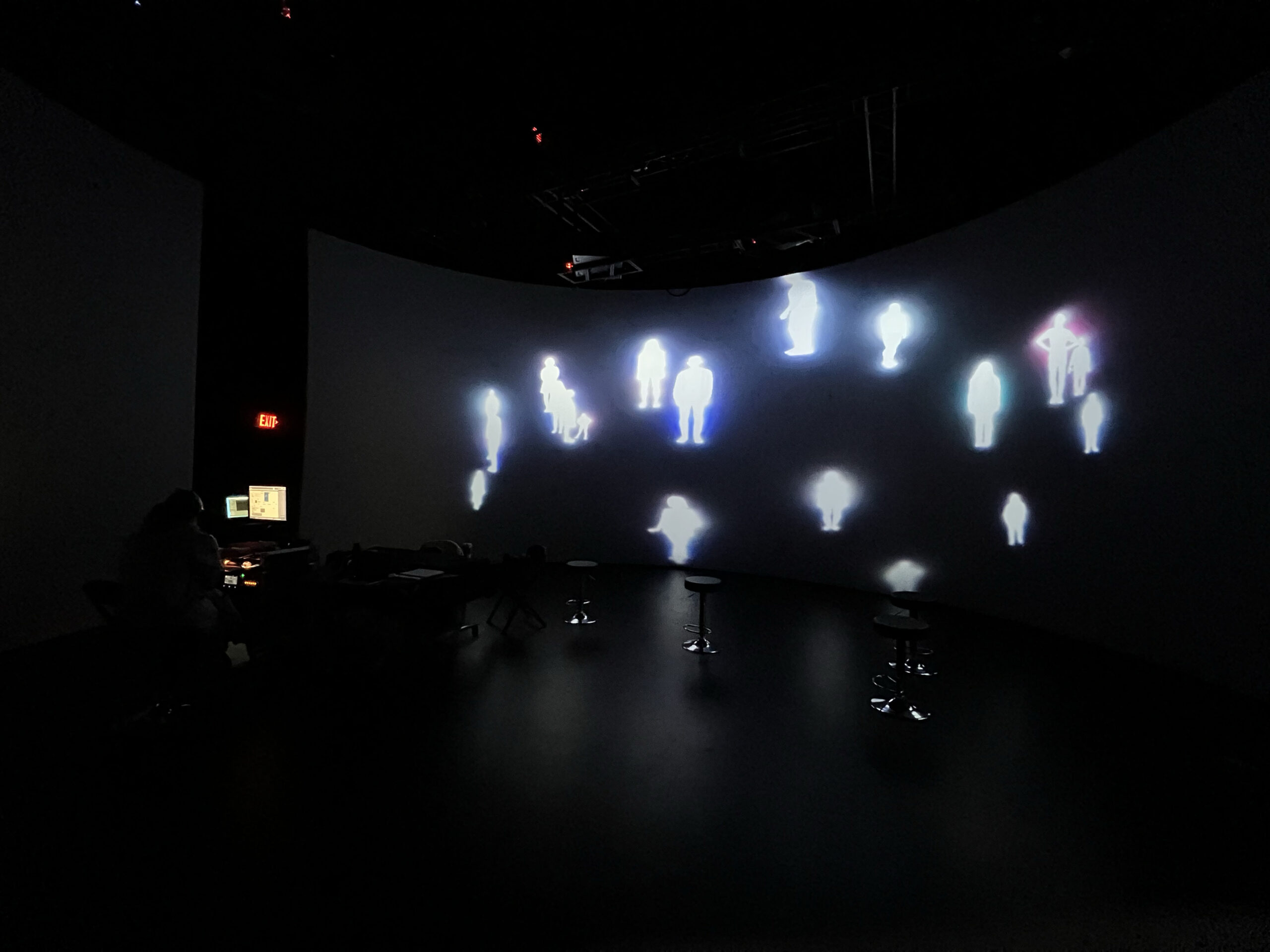
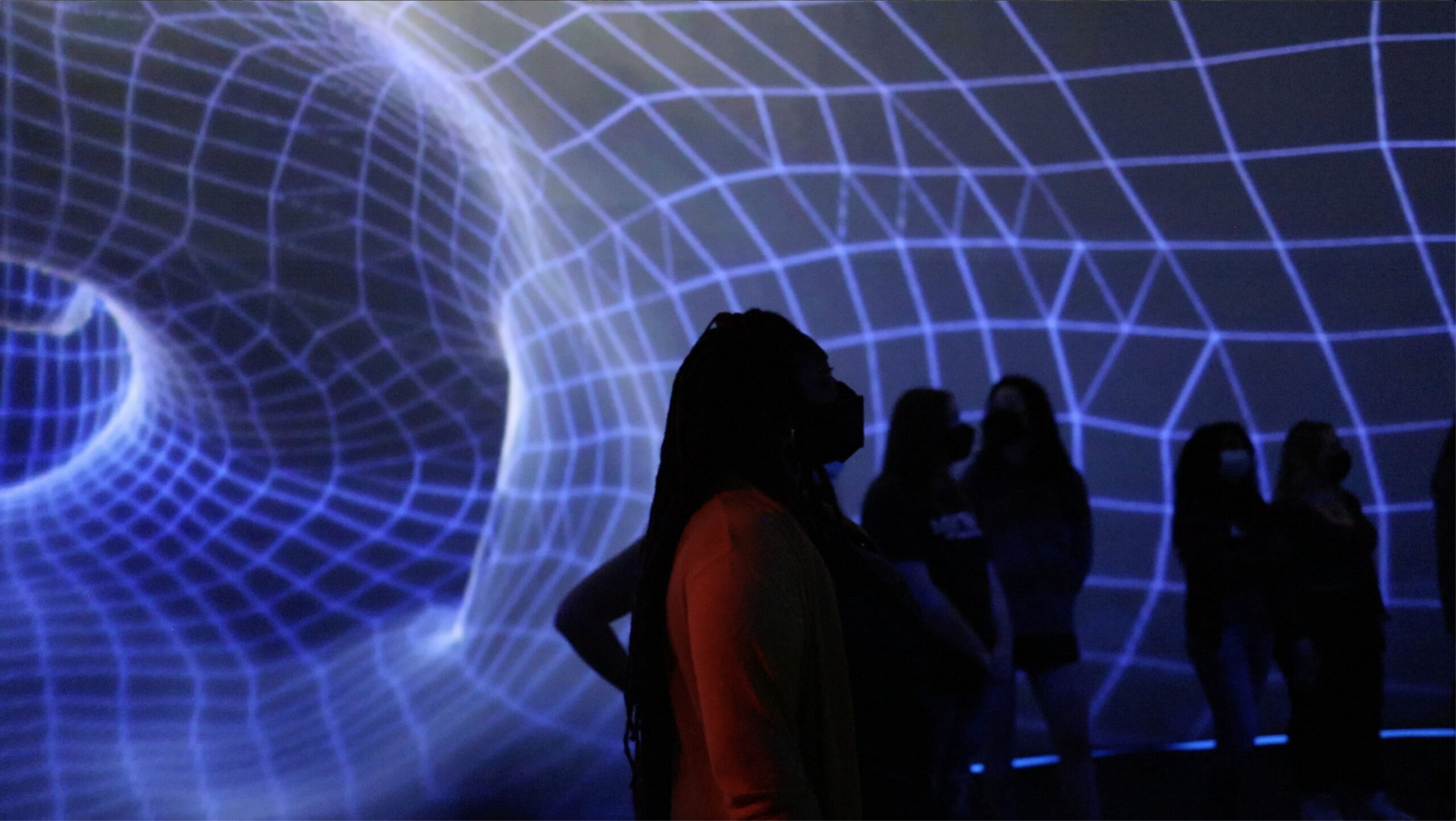
The visualization unfolded in three movements. First, the Threshold Stage: the audience entered through a dimly lit corridor lined with spectral, blurred figures, recalling the "shadow portraits" of historical posture photography. Second, Embodied Monologues: a slow, internal navigation through a wireframe human body appeared on the cyclorama, paired with performer narratives. Third, Collective Reflection: audience portraits emerged, dissolved, and re-formed, suggesting the instability and relational nature of identity. The spatial audio design employed Open Sound Control (OSC) to position monologue fragments dynamically throughout the CUBE's multi-channel array. This scattering of voices mirrored the fragmented nature of memory and the complex affective terrain of recognition — at times affirming, at times unsettling.
Critical and Historical Resonance
By incorporating archival critique directly into the performance's visual grammar, Posture Portraits at the CUBE reframed the coercive legacy of posture photography into a collaborative, co-authored event. The historical posture exam — once a disciplinary technology of racialized and gendered surveillance (Young, 1990; Vertinsky, 2002) — was reimagined as a platform for self-narration and mutual witnessing. This second generation was also the most technically complex version to date, integrating real-time data processing, procedural graphics, live performance, and spatial audio. More than an aesthetic upgrade, this complexity functioned as an ethical and political intervention, transforming an archival practice of extraction into an encounter of reciprocity and recognition.
References
Berlant, L. (2011). Cruel optimism. Duke University Press.
Browne, S. (2015). Dark matters: On the surveillance of Blackness. Duke University Press.
Lowe, M. A. (2005). Looking good: College women and body image, 1875–1930. Johns Hopkins University Press.
Vertinsky, P. (2002). "Exercise, physical culture, and the emergence of the modern body." In J. A. Mangan & P. McIntosh (Eds.), Sport in history: The making of modern sporting history. Routledge.
Vertinsky, P. (2007). "Seeing and believing: Sheldon's somatotypes and the visual construction of the 'ideal' body." Canadian Bulletin of Medical History, 24(2), 351–386.
Wynter, S. (2003). "Unsettling the coloniality of being/power/truth/freedom." CR: The New Centennial Review, 3(3), 257–337.
Young, I. M. (1990). Throwing like a girl and other essays in feminist philosophy and social theory. Indiana University Press.